
A2 Gentilino–Lamone: Modernizing the highway by integrating the circular economy
07/04/2026
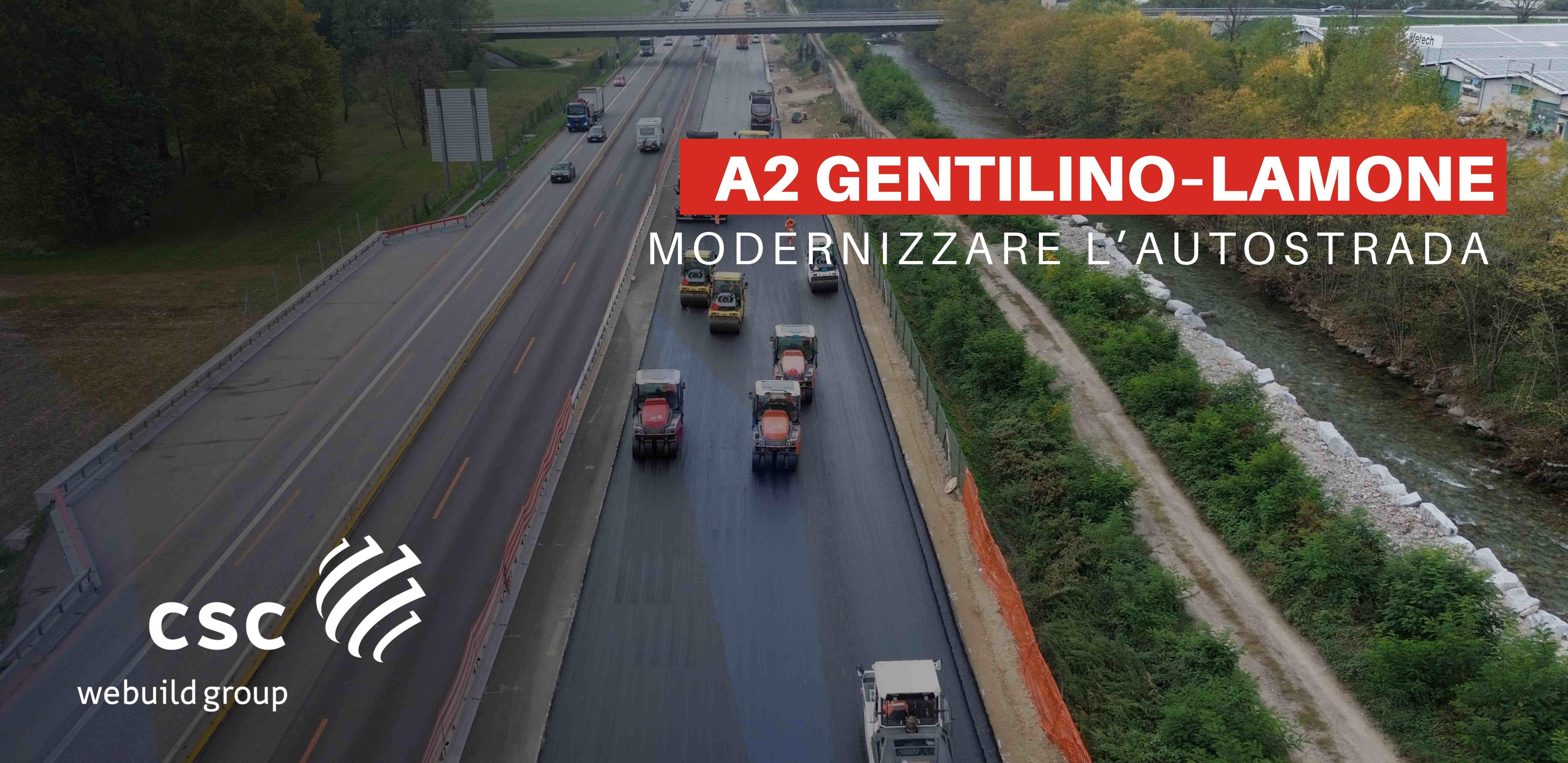
At the A2 motorway construction site (Switzerland) between Lamone and Gentilino, material valorization plays a central role in the project’s sustainable management. Hundreds of thousands of tonnes of materials generated by the works are recovered and reused directly on site, reducing the need for new raw materials and limiting the transport of materials.
This approach makes it possible to avoid thousands of truck journeys and helps reduce the overall environmental impact of the works, promoting a circular economy model applied to infrastructure.
The EP28 Gentilino–Lamone project, carried out for the Federal Roads Office (FEDRO), involves the modernization and rehabilitation of a strategic section of the Swiss motorway network. Lot 202, awarded to a consortium led by CSC Costruzioni (Webuild Group), includes major maintenance and upgrading works on the infrastructure, including pavements, structures, and technical installations.
Giving materials a second life
Motorway maintenance generates large quantities of materials from the demolition of existing structures, such as concrete, asphalt, and steel. FEDRO prioritizes the recovery and recycling of these materials instead of their disposal, enabling their reuse in the construction of new infrastructure.
In particular, materials from the removal of old road surfaces are processed and reintegrated into the production of new bituminous mixes. In Switzerland, around 2.5 million tonnes of material from road surface removal are generated each year, about 10% of which comes from national roads.
Thanks to technological advances and quality control procedures, a significant share of these materials can be reused in new pavement layers.
Recycling and innovation in the Gentilino–Lamone project
In the Gentilino–Lamone project, material recycling represents a concrete solution to reduce the environmental impact of the construction site.
A significant portion of the asphalt from the old pavement is recovered and transformed into new material for road resurfacing. In the project, up to 80% of the asphalt used for the new pavement comes from recycled materials.
Over the entire project, حوالي 750,000 tonnes of materials—equivalent to about 325,000 cubic meters, or the volume of 130 Olympic-sized swimming pools—will be directly reused on site. This solution significantly reduces the transport of materials by heavy vehicles, easing traffic on the local road network while helping to protect air quality.
A more sustainable infrastructure
Material recycling is now a key element in the construction and maintenance of road infrastructure. The goal is to progressively increase the share of reused materials without compromising the quality, safety, and durability of the works.
Through innovative solutions and efficient resource management, the A2 motorway (Switzerland) project between Lamone and Gentilino demonstrates that it is possible to combine high technical performance with environmental sustainability, contributing to the modernization of a strategic mobility corridor in Switzerland.
Project Overview
The Gentilino–Lamone project aims to modernize and carry out major maintenance on a key section of the A2 motorway (Switzerland), a strategic route linking southern Switzerland to the European corridor between Milan and the Gotthard.
Lot 202, awarded to a consortium led by CSC Costruzioni, represents the core of the civil engineering works. It includes the renovation or reconstruction of 27 structures, including bridges, underpasses, and related infrastructure.
The works are carried out while maintaining traffic on this heavily used motorway. This condition requires careful planning and constant coordination between teams to ensure user safety and traffic continuity.
Key Figures
- Project length: 6 km of motorway modernized
- Structures involved: 27 bridges and structures renovated or rebuilt
- Workforce: up to 120 people on site
- Recycled materials: up to 80% recycled asphalt in new pavements
Sustainability Impact
Circular economy on site
Materials from demolition, particularly asphalt and concrete, are sorted and reintroduced into the production cycle for new pavement layers.
Reduced transport
Reusing materials directly on site avoids thousands of truck journeys, reducing transport-related emissions.
Lower environmental impact
The use of recycled materials limits the extraction of new natural resources and reduces the project’s overall environmental footprint.
More sustainable infrastructure
The integration of innovative solutions and recycled materials helps ensure the long-term durability and performance of the infrastructure.